Zinc phosphating
What is zinc phosphating?
Zinc phosphating is a chemical (pre-)treatment in which a phosphate layer is applied to a metal surface (for example, steel, cast iron or aluminium).
The phosphate treatments can be divided into different types.
At VDL Laktechniek, zinc phosphating is used.
Compared with an iron phosphate layer, a zinc phosphate layer is considerably thicker and more durable. This means that the zinc phosphate layer is suitable for outdoor use, thanks to its superior corrosion-resistant properties.
The zinc phosphating process
VDL Laktechniek offers this process in combination with KTL as a base coat for a subsequent Wet Paint or Powder Coating treatment.
Phosphating can be applied to the product in two ways: namely by using an immersion process or a spray process.
In the immersion process, the products are hung up and then immersed in a series of baths.
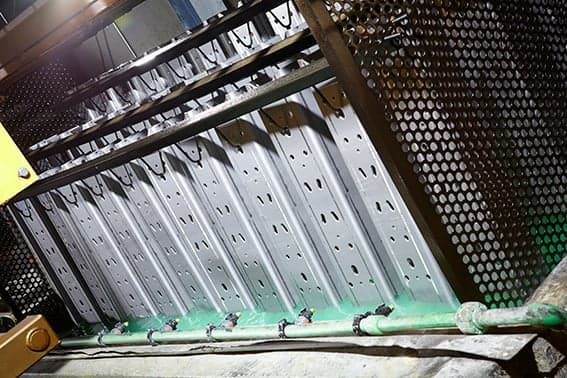
The products in the spray process are also hung up and then transported through a tunnel equipped with various spray nozzles. Each section of the spray line has its own set of nozzles, with each individual process step taking place there. This form of zinc phosphating is used on our production line, where we subsequently carry out Powder coating directly.
VDL Laktechniek uses a suitable trication zinc phosphate system. This is the most commonly used system among phosphate treatments.
It means that the chemical composition is based on zinc, nickel and manganese. This combination reacts positively with virtually all types of metal, resulting in strong corrosion protection and high-quality paint adhesion.
Zinc Phosphating at VDL Laktechniek
It has already been mentioned that the composition of the phosphate layer means that this process can be applied to various types of metal, such as steel, galvanised steel and aluminium.
This is generally beneficial for current automotive standards, as mixed-metal constructions are widely used in this industry.
Zinc phosphating is therefore mainly used in the automotive industry. In addition, zinc phosphate treatment is also widely used as a base treatment in the agricultural sector.
The main benefit for this sector is the treatment’s corrosion-resistant properties.
In this sector, treated products are frequently exposed to factors that cause oxidation/corrosion.
Benefits of zinc phosphating at VDL Laktechniek
Corrosion-resistant
Quality
Flexible
Stable

VDL Paint Technology
VDL Paint Technology Meerenakkerweg 20 5652 AV Eindhoven The Netherlands